WHY WE LOVE LEGISLATION
Hey Moyeesta,
Ever heard of The Landlord's Game? Probably not. But I'm sure you've played it. Elizabeth Magie designed it in the early 1900s to show how unfair an economy becomes when property owners 'win' by making tenants poor. Later it became Monopoly. The lesson disappeared, but the game stayed.
Adam Smith once talked about an invisible hand that keeps the market in balance. Nice idea. But by now that hand is wearing a magician's glove. It pulls tricks for an ever smaller club of companies and people.
I have nothing against capitalism, really. For a long time it delivered what it promised: a better future for everyone. But in recent decades the economy has turned into a game of Monopoly you simply can't win anymore. All the hotels already belong to someone else.
In coffee you see this crystal clear. There are around 12.5 million coffee farms worldwide, and 95% of them are smaller than five hectares. Those farmers sell to a handful of big traders and roasters. Farmers get poorer, a few companies pocket the profit. That's not a market. That's a board where the dice are secretly loaded by a few cheaters. You know me: I call them planet-plundering oligarchs.
So yes, slightly against my own instincts, Moyee and I are asking for stricter rules. Sounds crazy, right? But it makes sense. As long as doing good is optional, the cheapest player wins. A law turns good intentions into a floor for everyone. Do-goodnik companies like Moyee show that it can be done. The law has to force everyone to clean up the mess, like we do, instead of making it.
Since 27 September 2026 the European directive against greenwashing applies, EmpCo. Too little, too late? I think so. But better something than nothing. And as always, we don't wait until we have to: we test the new rules on ourselves straight away. Spoiler: not everything passed the test!
Grab your mindful moment and travel with me for a few minutes.
In short
- Since 27 September 2026 the European EmpCo directive bans vague green claims, climate claims based on offsetting and self-invented sustainability labels.
- Moyee is in favour of stricter legislation: as long as doing good is voluntary, the cheapest player wins.
- Together with Clean Claims we tested all our claims against the new rules. Not everything passed: "100% transparent & fair" is coming off the bag.
- FairChain is not a certification label, but an open source way of working: value at origin, a living income for farmers, tackling CO₂ in our own supply chain.
- Our figures, farmer payments and calculations are public on our impact dashboard.
THE PROBLEM
First the good news: more and more people want things to change. A growing army of consumers is demanding exactly one thing: change!
So has BigCoffee obediently come round by now? No way. The Coffee Barometer 2023 by Conservation International, Solidaridad and Ethos Agriculture put it in black and white. The world's largest roasters call themselves sustainability leaders. They make big promises and join every nice partnership. But on paper those promises are disconnected from practice: a bit of charity, a CSR project, and otherwise business as usual.
Without a clear strategy and hard reporting on transparency, traceability, suppliers and monitoring, nothing changes in their supply chains. So it's still story-faking.
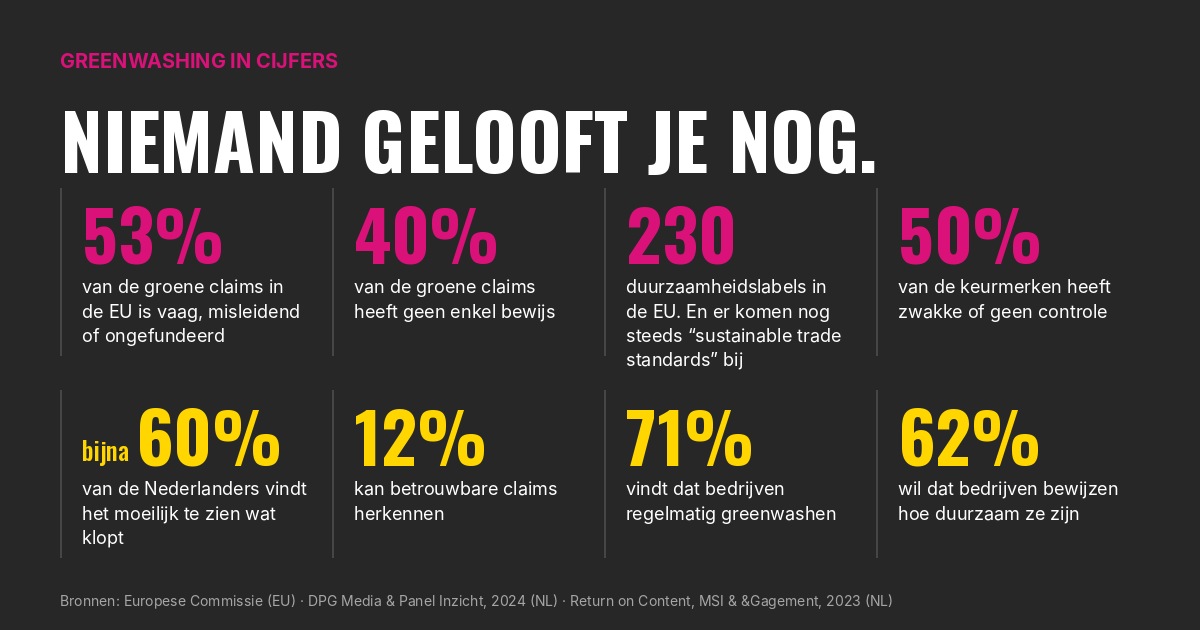
And the consumer? Can't see the wood for the trees. According to the European Commission, 53% of green claims in the EU are vague, misleading or unfounded. 40% have no evidence at all. There are some 230 sustainability labels, and half of them have weak or no verification. And in the Netherlands? Almost 60% find it hard to tell what's true, and only 12% can recognise reliable claims (DPG Media and Panel Inzicht, 2024).
Trust is gone. 71% of Dutch people think companies regularly greenwash, and 62% think companies should prove how sustainable they are (Return on Content, MSI and &Gagement, 2023). So do we. In fact, we've been saying it since 2012.
Sources: Coffee Barometer 2023; European Commission, Green claims; DPG Media and Panel Inzicht, 2024; Return on Content, MSI and &Gagement, 2023; Fairtrade Risk Map, coffee.
DUE DILIGENCE
In 2023 we wrote in our impact report: "Rumour in Brussels: the directors' duty of care may be dropped from the European due diligence directive. Scrap Article 25 and the bosses get off the hook. We say: go directly to jail!"
Guess what. The rumour was true. The directive (CSDDD) arrived in May 2024, without that duty of care. And in February 2026 Brussels got the scissors out again, with the Omnibus package. The directive now only applies to companies with more than 5,000 employees and €1.5 billion turnover, instead of 1,000 and €450 million. The mandatory climate plan is gone, and so is the European liability regime. And companies don't have to start until July 2029. The bosses got their 'Get out of jail free' card.
And The Hague? No better. For years we lobbied for a Dutch law on international responsible business conduct (IMVO). It never came. The Netherlands did not want to "take a different course from other EU countries" and chose the European directive only. When Brussels started watering it down, the government put its own implementation law on hold. And it even supported scrapping the climate plan. Average European, then. And that average kept getting lower.
We didn't wait. We published our own due diligence report. Because if a small company can do it, the big boys can too. And we wrote about why reporting risks alone isn't enough: without hard targets and monitoring, every company picks the easiest risks.
Read more: Corporate social due diligence legislation: we need to brew stronger standards! (April 2023)
Sources: Directive (EU) 2026/470 (Omnibus I); RVO, CSR laws and regulations; Letter to parliament by Minister Veldkamp, 24 March 2025; Stibbe on the Dutch government decision, 2023.
DEFORESTATION
We've been collecting data since 2017 on our farms in Ethiopia. Every harvest, every farmer, every coffee tree with its location. When the EU Deforestation Regulation (EUDR) came along, we didn't have to start from scratch. We simply built a due diligence system around it: registering farmers, mapping plots, asking suppliers for geolocation.
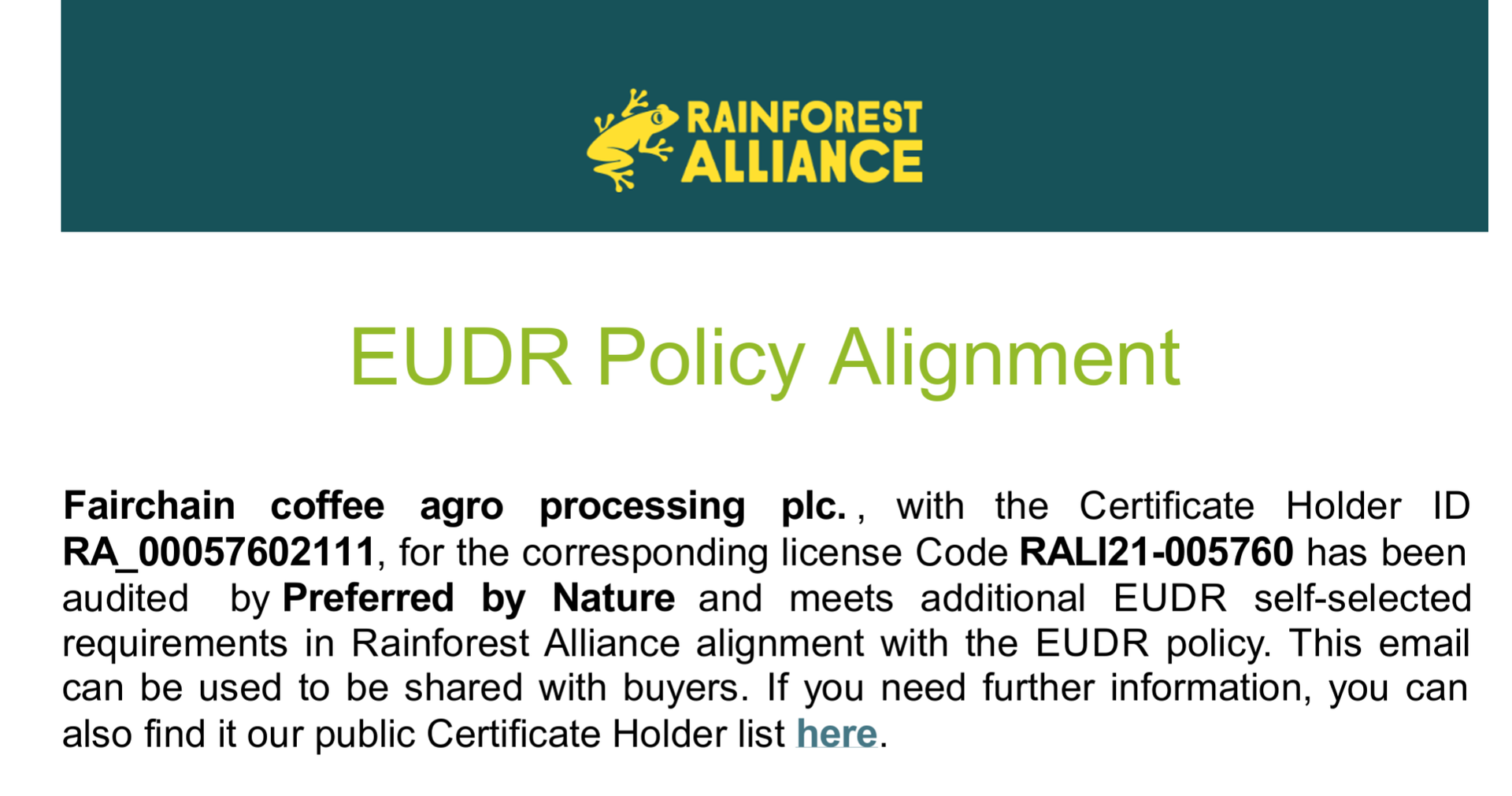
Our coffee farms Mizan and BAC in Ethiopia are Rainforest Alliance certified and passed the EUDR-focused audits. The EUDR itself? Postponed twice, and for large companies it only applies from 30 December 2026. We just kept going.
Read more: Digitalization: using data to pay farmers and protect forests! (March 2025)
Sources: Rainforest Alliance certificate holder RA_00057602111 (licence RALI21-005760), Fairchain Coffee Agro Processing PLC; Baker McKenzie on the EUDR postponement, December 2025.
GREEN CLAIMS
Let's be clear: we have nothing against official certification labels. Fairtrade, Rainforest Alliance and organic have genuinely improved coffee farming. And they woke up millions of consumers. Applause.
But it's not enough. Almost half of certified coffee isn't even sold as certified (IISD, 2026). And without a minimum price that covers production costs plus a living income, it remains a sticking plaster. Platforms like the Global Coffee Platform and the Sustainable Coffee Challenge all put a living income at the top of their list. We still see hardly any real progress.
Much worse is the jungle of self-invented labels. You know them: a green leaf, a hand holding a bean, and underneath "Responsible Trade Standard" or "Sustainable Coffee Program". Dreamt up by the marketing department, drawn by the in-house designer, checked by hardly anyone, on hardly anything. And the slightly smarter brands? They have a few farmers, one product or a self-invented component checked externally, and then stick the stamp on everything. Monopoly money, but for sustainability.
And who speaks up? Few NGOs and existing certification bodies, because their existence often depends on those same big players. A pity, because they could play a strong role: as inspectors of mandatory rules instead of even more self-invented labels.
That's why we welcome EmpCo. Since 27 September vague claims like "green" or "eco-friendly" without evidence are banned. "Climate neutral" through purchased CO₂ credits is no longer allowed at all, and neither are self-invented labels.
That fun is over now. A sustainability label is only allowed if there's a real certification scheme behind it: open to every company on the same terms, requirements drawn up with experts and stakeholders, sanctions if you don't comply, and an inspector independent of both the label owner and the brand. Or if the government set up the label itself. Drawing your own stamp and putting it on your own bag? Go directly to jail. Do not pass Go. Do not collect €200.
And yes, we hold ourselves to that same standard. So let's say it straight away: FairChain is not a certification label. Never has been. It isn't a stamp you buy, but a way of thinking. Keeping value where the coffee grows. Paying farmers according to what life costs. Tackling CO₂ in your own supply chain, not buying it off somewhere else. And it's open source: anyone may take the model, copy it and improve it. Please do.
What does count are the facts. Radical transparency, then. Every payment to a farmer with proof of payment, every registered tree with GPS location, every CO₂ calculation with source and method: online, for everyone. Even when it disappoints. We don't ask you to trust our stamp. We ask you to check our numbers. No sticker on the bag, but the receipts on the table.
But the law has gaps. Independent verification is only mandatory for certification labels and claims about the future. The stricter Green Claims Directive has been stuck in Brussels since June 2025 (Packaging Gateway). Social claims, like what farmers earn, are largely out of the picture. The risk: companies go quiet instead of proving. That's called green hushing.
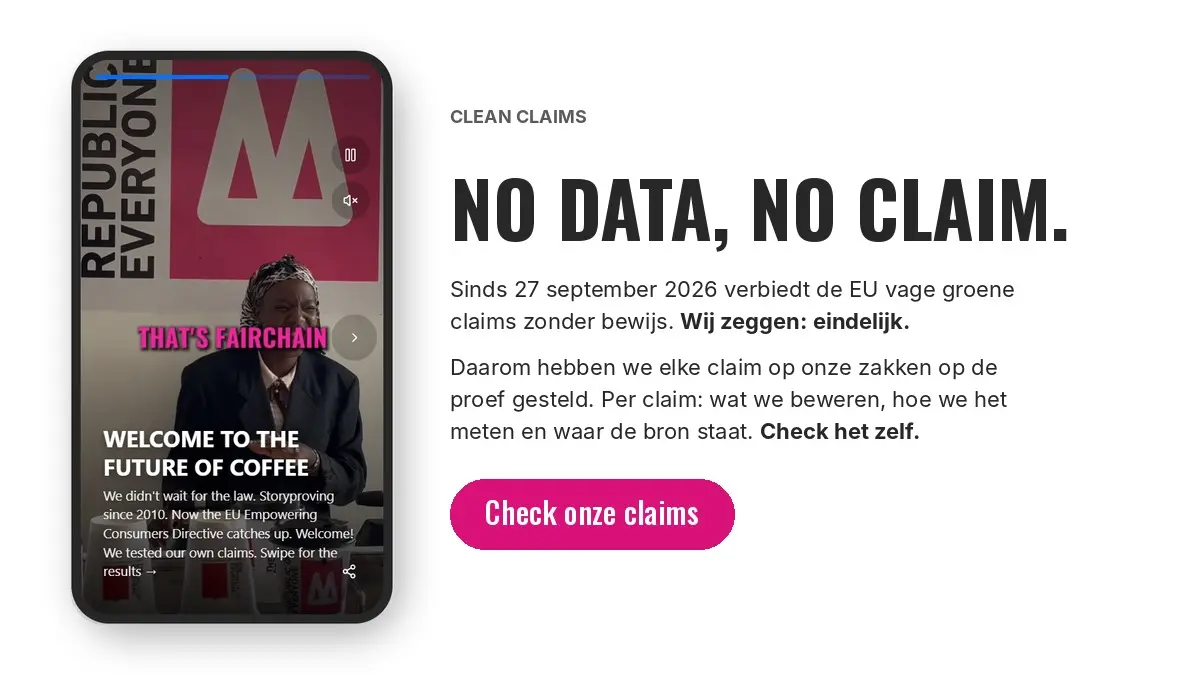
We do the opposite. Together with Clean Claims we held every claim on our bags and website against the new rules and our own data. Including the social claims. And to be fair: not everything passed the test. All results, with evidence and sources, are public in the Clean Claims app.
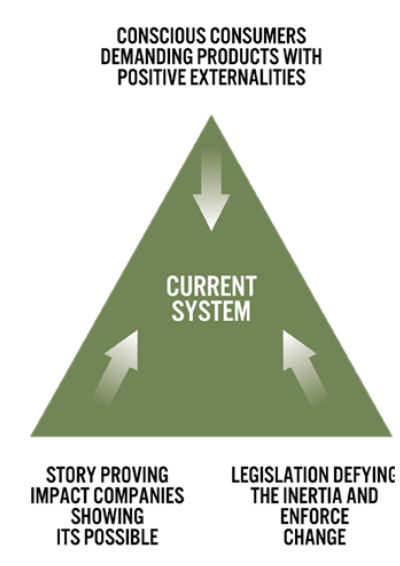
Why all that effort when it's not yet required? Because system change comes from three corners at once. We call it the golden triangle:
- Conscious consumers who demand products that make the world better.
- Storyproving companies that show it can be done, and challenge the orthodoxy of fake.
- Legislation that breaks the inertia and makes the rest follow.
None of the three can do it alone. Together they tip the current system.
Sources: Directive (EU) 2024/825 (EmpCo); IISD, Global Market Report: Coffee and sustainability (2026); Packaging Gateway on the Green Claims Directive, June 2025.
POSITIVE LEGISLATION
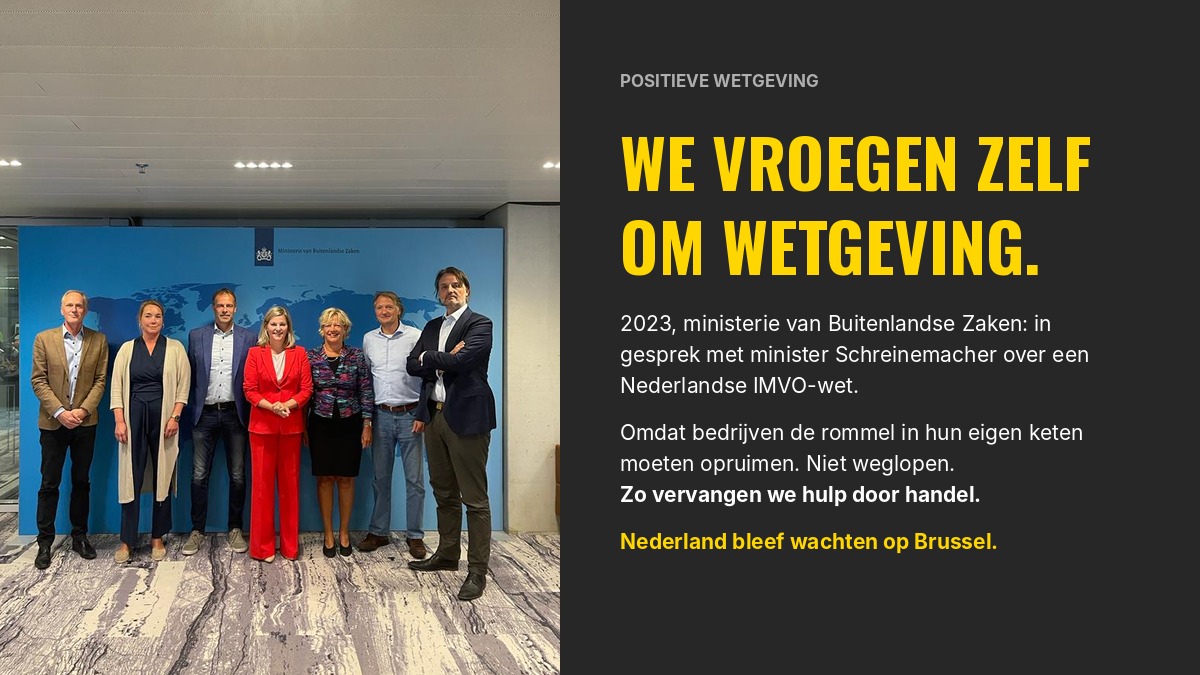
So we are fully in favour of legislation. Loud and clear. Stricter, and less voluntary. While we were building a new model for coffee, the EU came up with laws that reinforce each other: CSRD, CSDDD, EUDR and now EmpCo. Finally someone recognises that the rules of the coffee game need to be rewritten.
But then do it properly. Two things.
For everyone. Many rules, like the due diligence directive, only apply to the largest companies. But a lot happens in SMEs too. Big or small: same game, same rules.
Positive. A law that only prohibits invites people to walk away. Take the EUDR: buyers may start avoiding small farmers in risk areas, instead of protecting the forest together with them. Then the problem shifts, but it isn't solved. We do it the other way round: we go precisely to the places where the problems are biggest.
A positive law obliges everyone to solve problems. Keeping value in the country of origin. Paying farmers a living income. Reducing CO₂ in your own supply chain. Then there's no more need for aid to repair the damage afterwards. Then it's simply trade that solves things. Trade, not aid.
Meanwhile, grey corporate dinosaurs stamp their feet as soon as the word legislation comes up. Afraid of change, afraid of real responsibility. Fine. We play on a different board. Our Moyee-poly: a board where you win with the best balance between personal prosperity and public wellbeing.
Sources: CSRD, Directive (EU) 2022/2464; CSDDD, Directive (EU) 2024/1760; EUDR, Regulation (EU) 2023/1115; EmpCo, Directive (EU) 2024/825.
CLIMATE
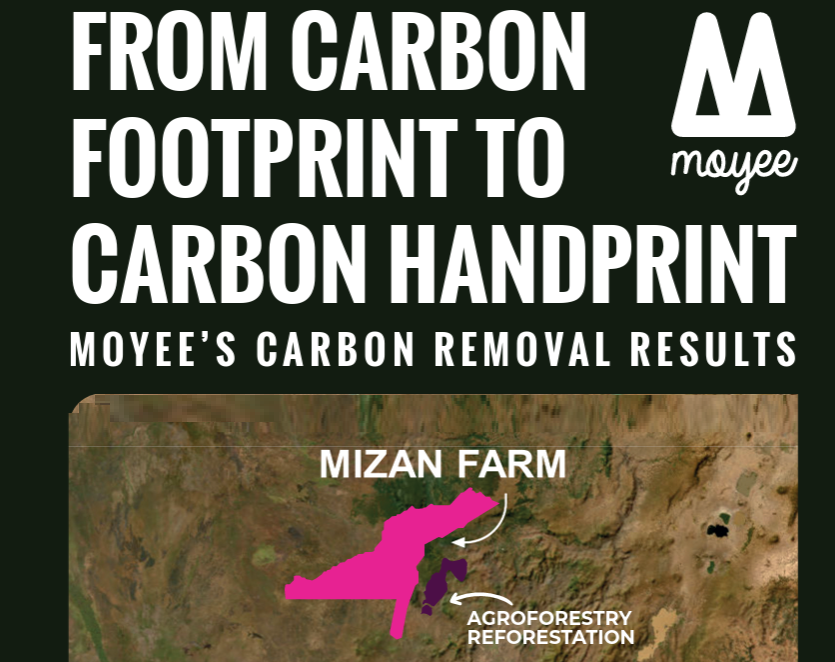
The ban on climate claims based on offsetting? Doesn't affect us. We've never bought CO₂ credits. We've seen offsetting as a form of greenwashing for years: you buy your way out and change nothing. We work with insetting: capturing CO₂ within our own supply chain in Ethiopia and Kenya, together with the farmers who supply our coffee.
The calculation behind "Climate positive" is in the app, with method and source. But what's still missing is independent verification. We want that done before our new bags arrive in February 2027. Until then the claim stays on the current bags, because throwing packaging away isn't exactly sustainable either. Verification not done in time? Then the claim comes off the new bag.
Or as Purity, our Storyprover in Nairobi, told me: "Guido, we're not dropping the claim, we're going the extra mile. We have the calculation. Now we're getting the external stamp too."
Read more: The difference between carbon offsetting vs insetting (December 2021)
NOBODY IS 100%
Our bags said "100% transparent & fair". That's coming off. Nobody is 100% fair or 100% sustainable. Anyone who claims that has some explaining to do. Including us.
To be honest, we've been saying that since day one. We don't call ourselves the fairest, but "the world's least unfair coffee company". We pay at least the Living Income Reference Price (LIRP). That's support, not a guarantee: not every farmer has a living income yet. We measure that separately.
The idea behind our model is simple. Coffee drinkers and coffee farmers aren't opponents, but teammates. Ownership means taking ownership: not just for yourself, but for the collective.
STORYPROVING
We're also using the new law as the starting signal for our new impact dashboard and a live feed. There you can see what we do, how we measure it and what comes out of it. Every farmer payment is shown with proof of payment next to the Living Income Reference Price. What goes well, and what doesn't. So anyone can judge us in public.
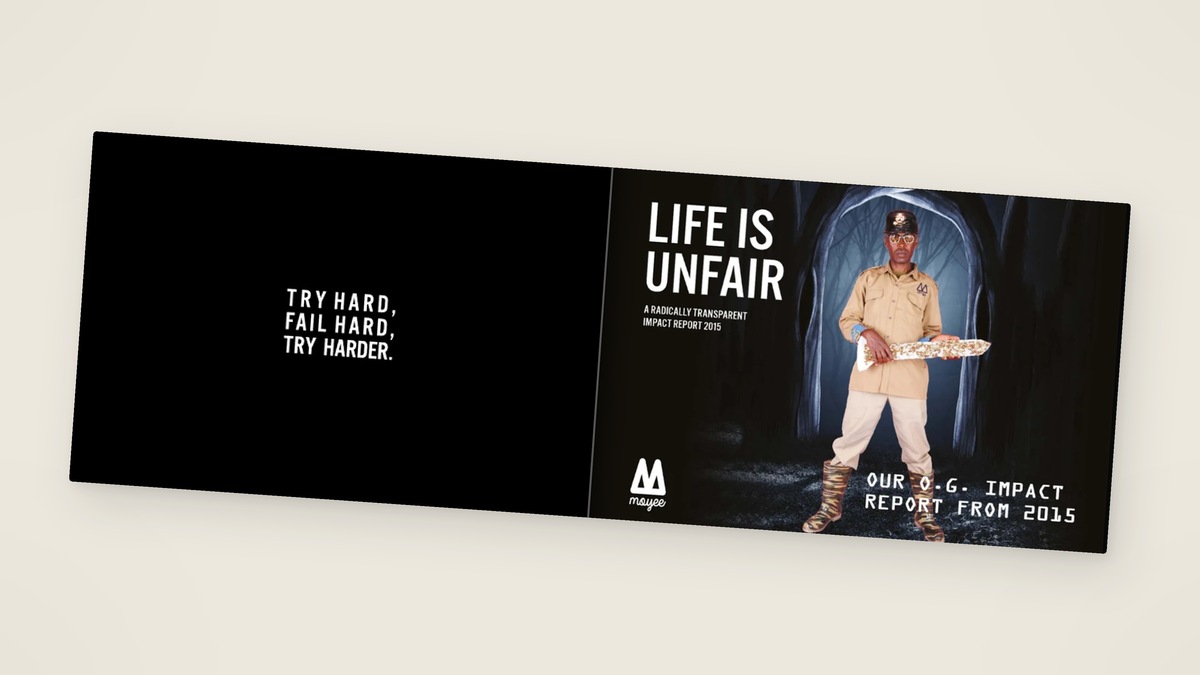
That's how we've always done it: try, fail, try harder. And Moyee has never asked anyone to just believe us. We always said: look for yourself, and if you see something that doesn't add up, let us know.
What else did we say? "Moyee is 50% amazing coffee, 50% experiment, and 100% the future of coffee." And you're part of that, legend!
RAISING THE BAR
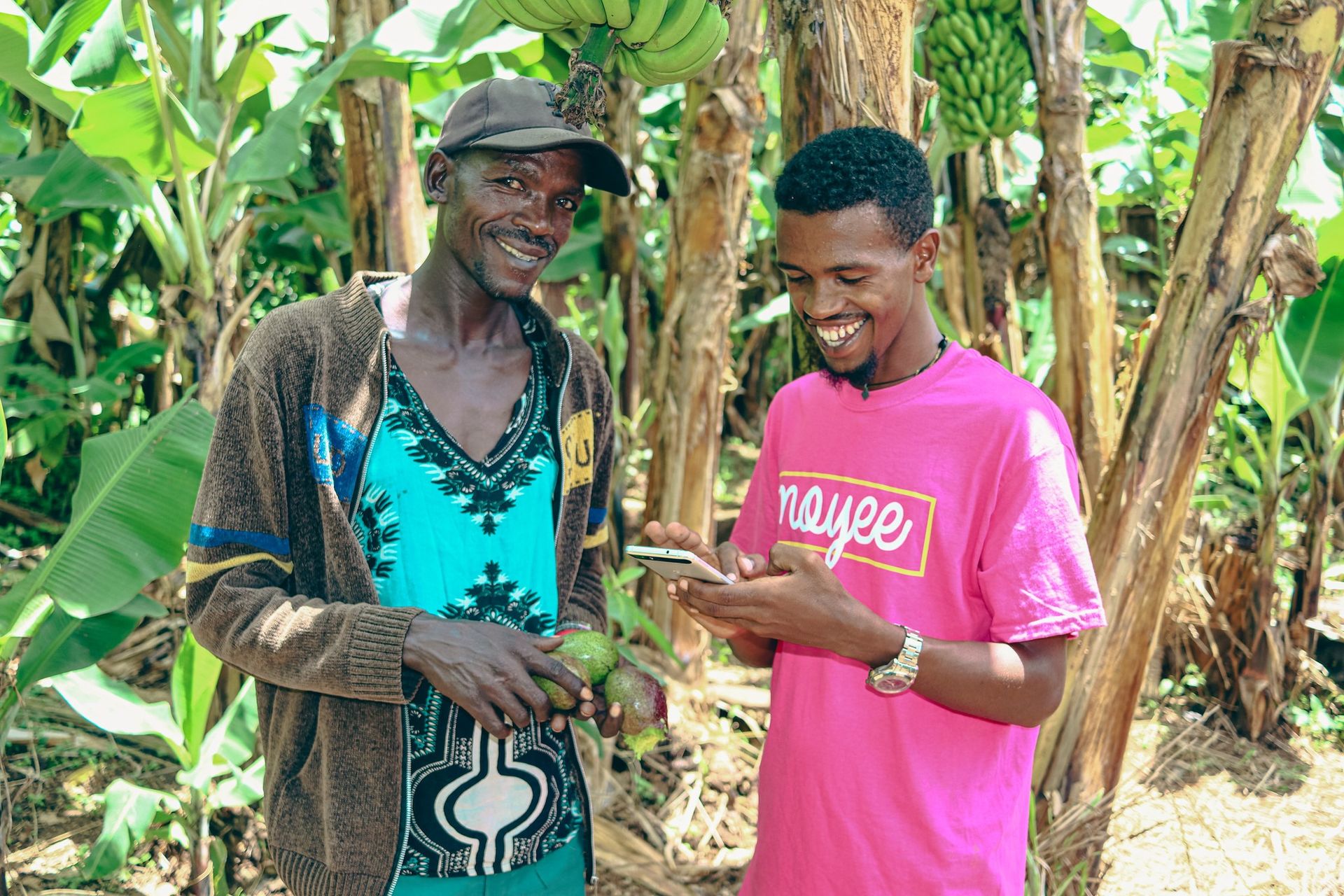
So yes, the law is too little and too late. And it could be five times stricter. But it's a start, and it sets the floor. We want to raise the bar. We may be small, but we dare to open our books. Even when it hurts.
Three things you can do:
- Check our claims. Scan the QR code on the bag or visit the impact dashboard. Something doesn't add up? Let us know.
- Ask every other brand the same question. Where's the proof?
- Support stricter rules. Make your voice heard in The Hague and in Brussels.
And companies that, like us, want to prove it can be done: join our learning-by-doing exercise. Share your data, join forces, help raise the bar. And above all, have fun. Do not pass Go, just come and play straight away.
Every sip counts,
Guido
FREQUENTLY ASKED QUESTIONS
What is EmpCo?
EmpCo is the European directive (EU) 2024/825 against greenwashing. Since 27 September 2026, general environmental claims without evidence are banned, as are climate claims that rely on CO₂ offsetting and sustainability labels without a real certification scheme.
Can a company still use its own sustainability label?
Only if there's a certification scheme behind it: open to every company, requirements drawn up with experts and stakeholders, sanctions for non-compliance and independent verification. Or if the government set up the label itself.
Is FairChain a certification label?
No. FairChain is an open source way of working: keeping value in the country of origin, paying farmers at least the Living Income Reference Price and tackling CO₂ in your own supply chain. What counts are the public figures.
Why is Moyee in favour of stricter legislation?
Because voluntary action doesn't work. As long as doing good is a choice, the cheapest player wins. A law turns good intentions into a floor for everyone.
What's the difference between CO₂ offsetting and insetting?
With offsetting you buy CO₂ credits from projects outside your own supply chain. With insetting you capture CO₂ within your own supply chain, with the farmers you buy from. Moyee has never bought CO₂ credits.
Who does the European due diligence directive (CSDDD) apply to?
After the 2026 Omnibus amendment, only to companies with more than 5,000 employees and more than €1.5 billion turnover, from 26 July 2029.
ALL SOURCES
- Richtlijn (EU) 2024/825 (EmpCo), European Union, 2024
- Richtlijn (EU) 2024/1760 (CSDDD), European Union, 2024
- Richtlijn (EU) 2026/470 (Omnibus I), via HSF Kramer, 2026
- Verordening (EU) 2023/1115 (EUDR), European Union, 2023
- Richtlijn (EU) 2022/2464 (CSRD), European Union, 2022
- Green claims, European Commission
- Coffee Barometer 2023, Conservation International, Solidaridad & Ethos Agriculture, 2023
- Global Market Report: Coffee and sustainability, IISD, 2026
- 60% van de Nederlanders twijfelt aan betrouwbaarheid van duurzaamheidsclaims, DPG Media & Panel Inzicht, 2024
- 71% Nederlanders denkt dat bedrijven aan greenwashing doen, Return on Content, MSI & &Gagement, 2023
- Fairtrade Risk Map: coffee, Fairtrade
- Letter to parliament on the Omnibus and the CSDDD, Minister Veldkamp, 24 March 2025
- MVO-wetten en -regels, RVO
- EUDR: provisional agreement on one-year postponement, Baker McKenzie, December 2025
- EU green claims law shelved, Packaging Gateway, June 2025
- Moyee Impact Report 2023 and 2025; Moyee Due Diligence Report 2022; Rainforest Alliance certificate holder RA_00057602111 (licence RALI21-005760), Fairchain Coffee Agro Processing PLC
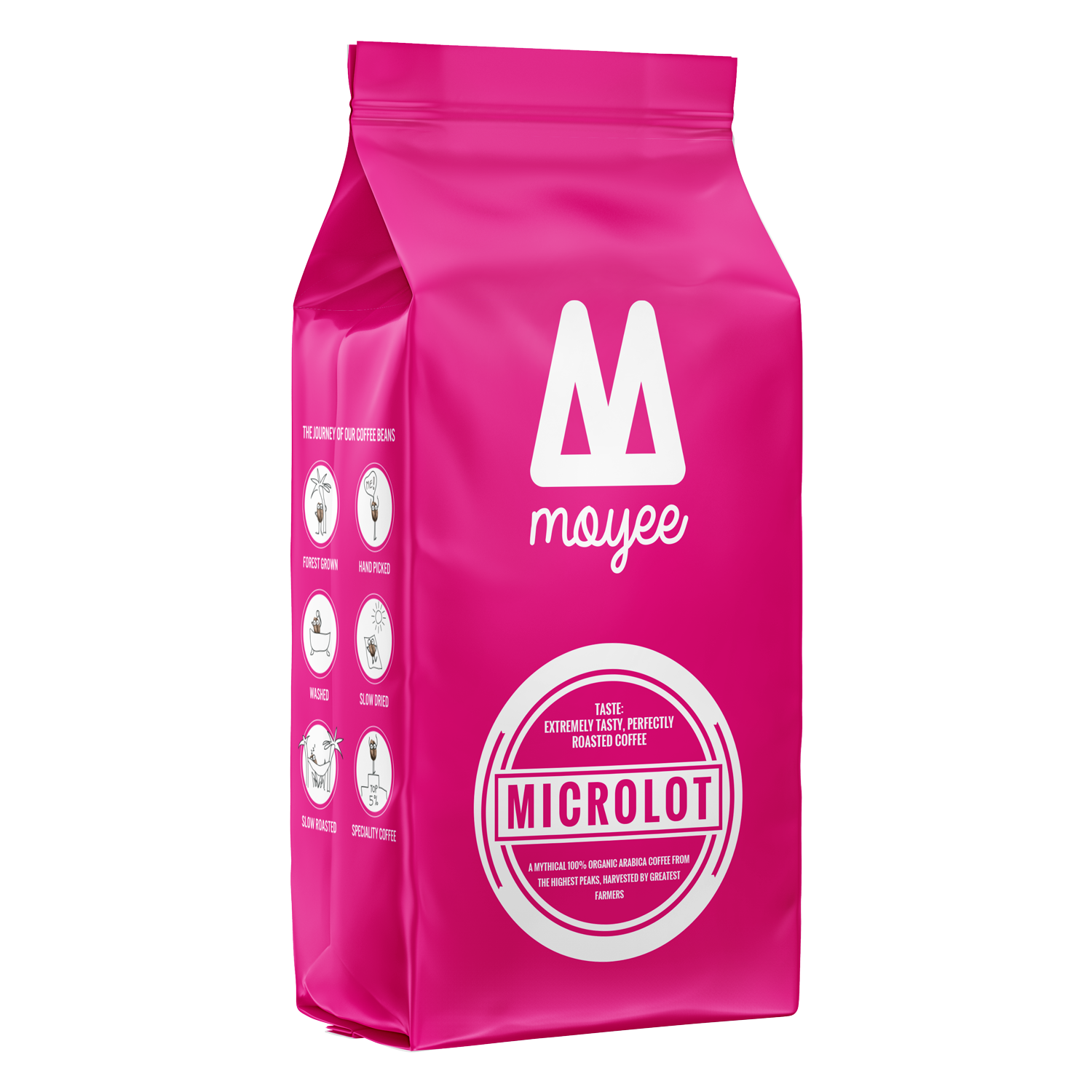 COFFEE: MICROLOT
AT 3:00, STANDARD
Layered, dark chocolate and dried fruit, with a long finish.
SHORTER BREW (2:30)
Sharp, the sweetness hasn’t come through yet.
LONGER BREW (3:30)
Heavier, loses its definition.
We will send you impact stories, Q&As with impact makers on the ground, new special Microlots, and of course, great coffee deals.