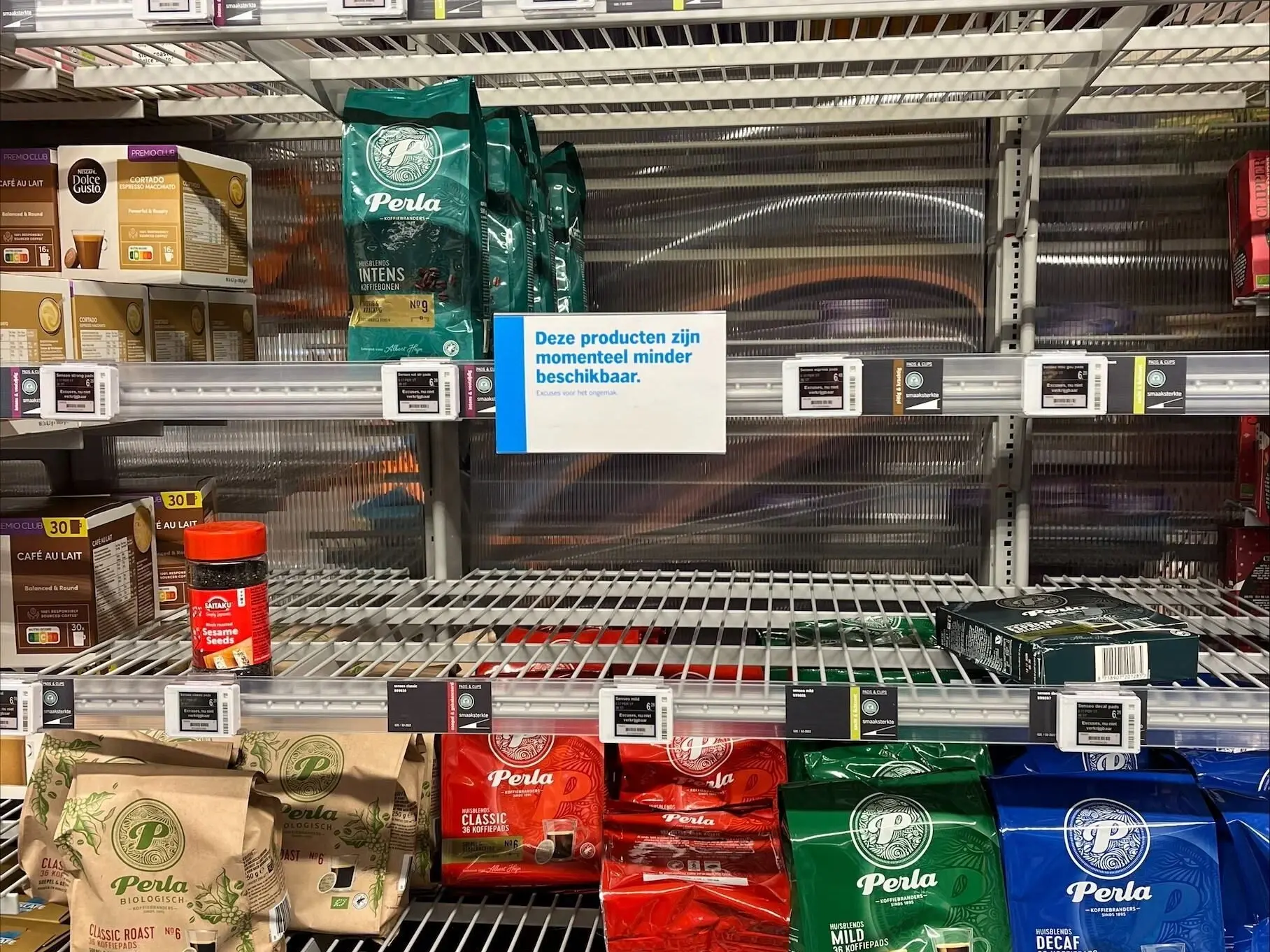
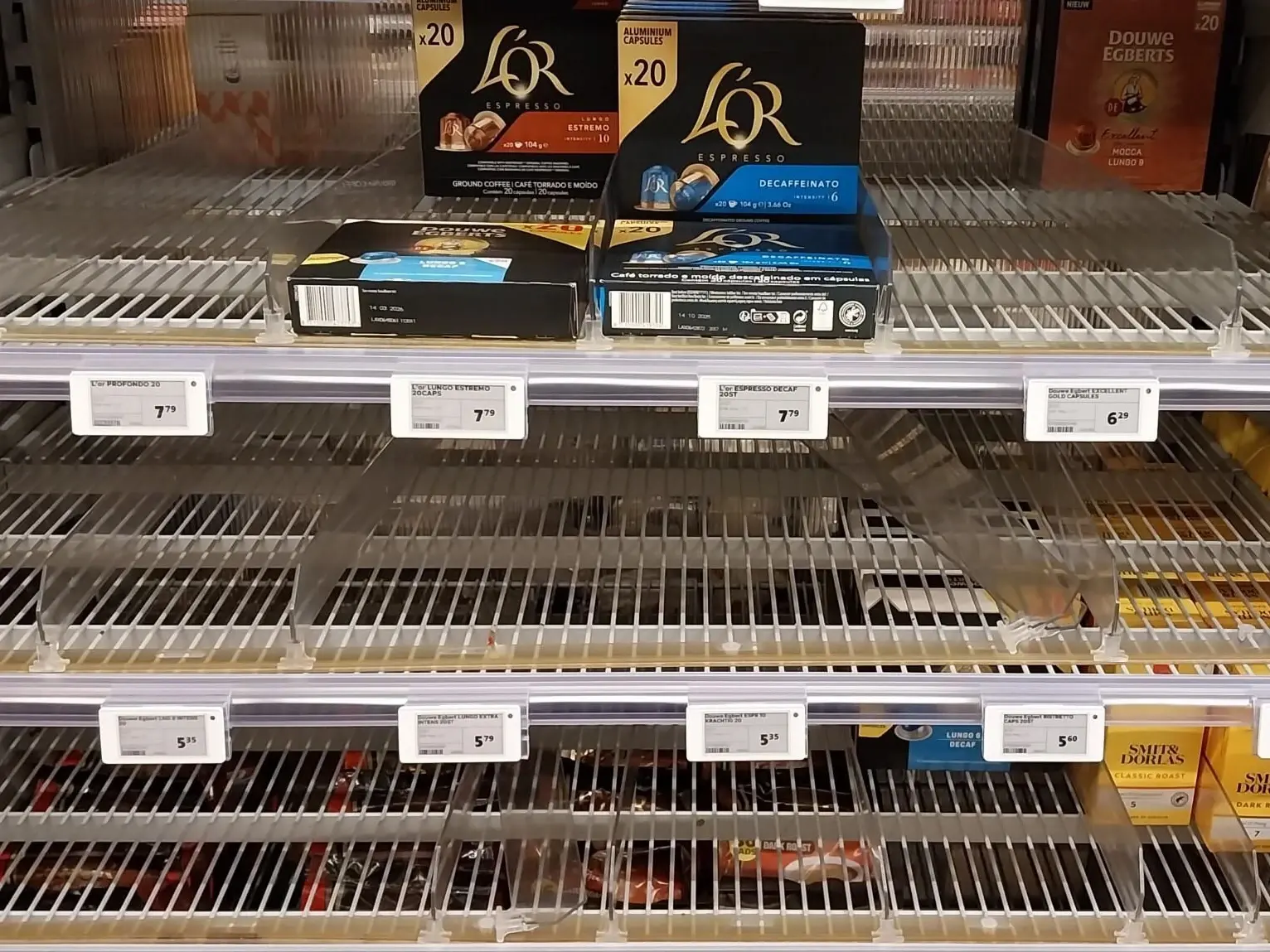
Coffee prices have risen so sharply in recent months that a dispute has erupted between supermarkets and the parent company of coffee roaster Douwe Egberts. In many supermarkets, the company’s coffee products are unavailable. At the heart of the negotiations is one question: who should bear the burden of the sharply increased prices?
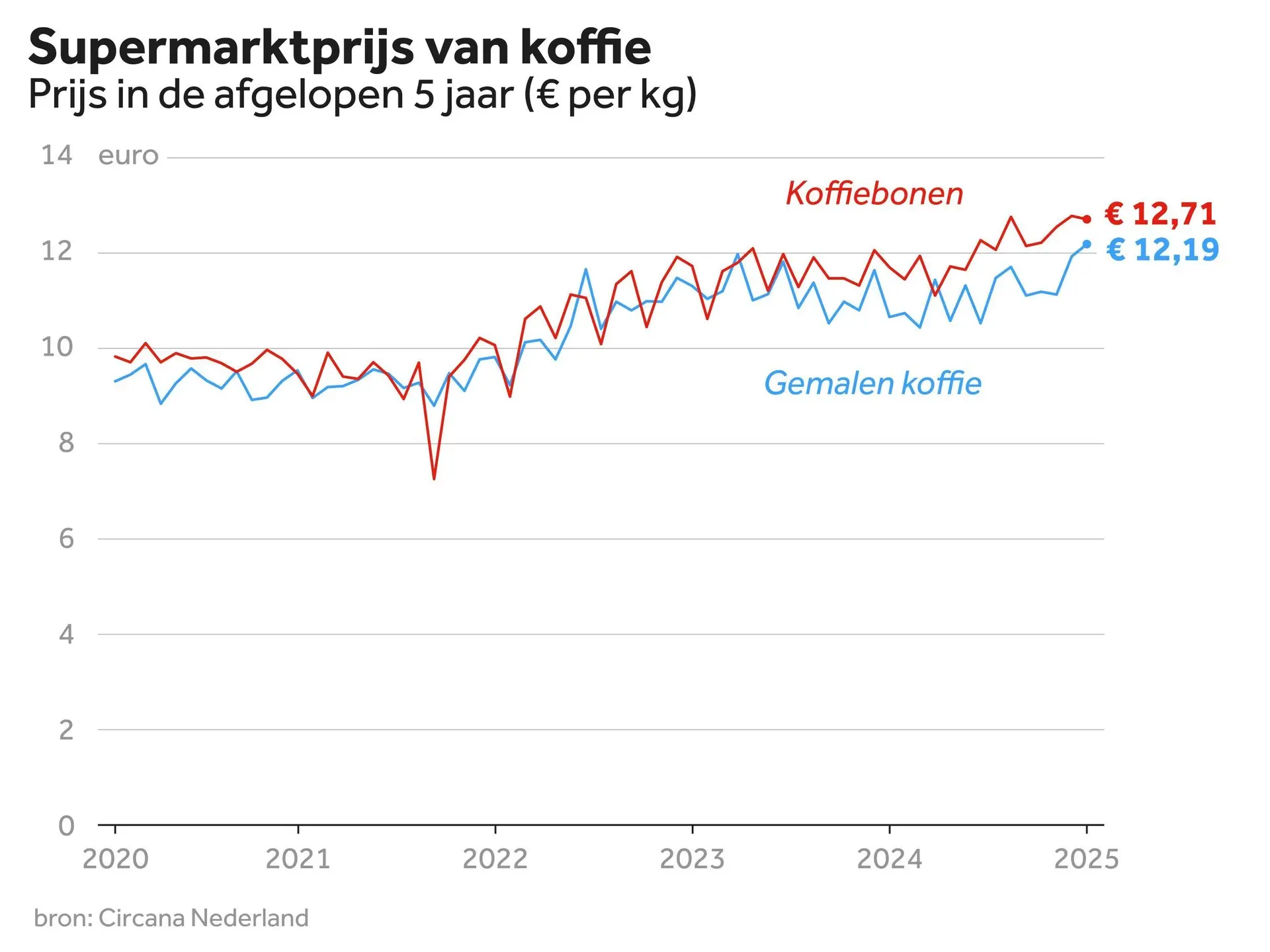
Currently, the price of a kilogram of Arabica coffee beans on the global market is around €8.50. The market price of this most widely used type of coffee bean has more than doubled over the past year. However, this increase is not yet reflected in supermarket prices, as the coffee currently on the shelves was already purchased last year.
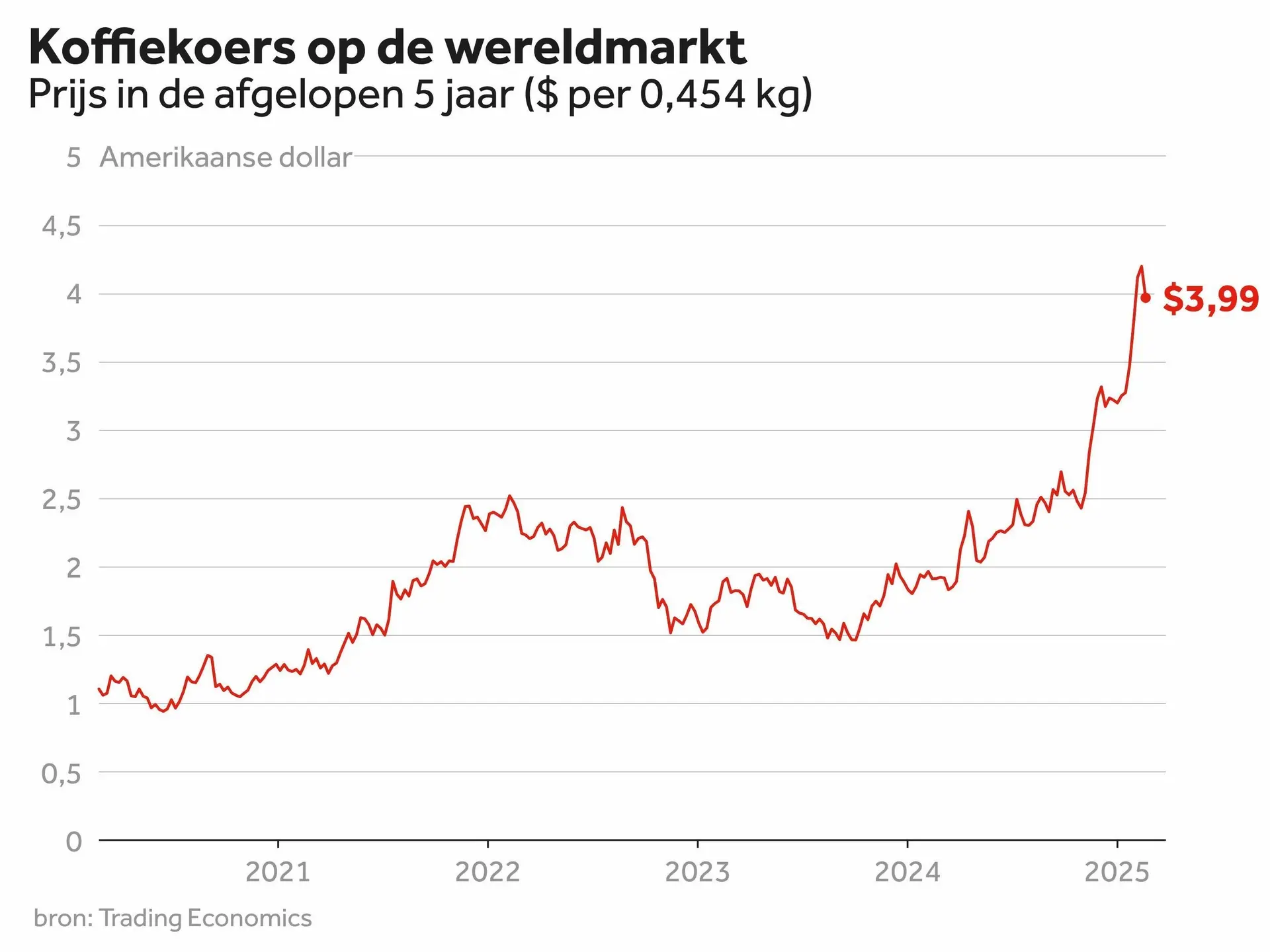
The rise in raw coffee bean prices has several causes. Brazil is one of the world's largest coffee producers, but over the past year, coffee farmers there have struggled with adverse weather conditions caused by climate change. As a result, the harvest was significantly smaller.
At the same time, global demand for coffee has increased significantly in recent years. Traditionally, tea was the preferred drink in Asia, but coffee has also become increasingly popular there over the past few years.
For example, American coffee chain Starbucks has experienced its fastest growth in Asia. In recent years, around 800 new stores have opened annually in China. Today, more than a third of all Starbucks locations are in Beijing, Shanghai, or one of China's other cities.
Who Will Pay?
The ongoing negotiations between JDE Peet’s, the parent company of Douwe Egberts, and supermarkets concern coffee prices for the coming year. Coffee has long been considered a staple product in Dutch households.

Supermarkets therefore want to prevent the coffee they sell from becoming significantly more expensive over the coming year. "We need to be able to explain major price increases to our customers," says Michiel Muller, founder of online supermarket Picnic. "Prices have risen enormously in recent years, and now we're being presented with proposals for further increases of 20 to 30 percent. That's unacceptable to us."
Other supermarkets also say they currently have fewer or no Douwe Egberts products in stock because they have yet to reach an agreement with JDE Peet's.
The coffee giant itself is reluctant to reveal much about the negotiations. "Annual negotiations with retailers are complex, with price being an important factor, but certainly not the only one. The price consumers pay in stores is determined by the supermarkets. It is very unfortunate that many coffee drinkers are currently unable to find their favourite coffee products at several supermarkets," says a spokesperson.
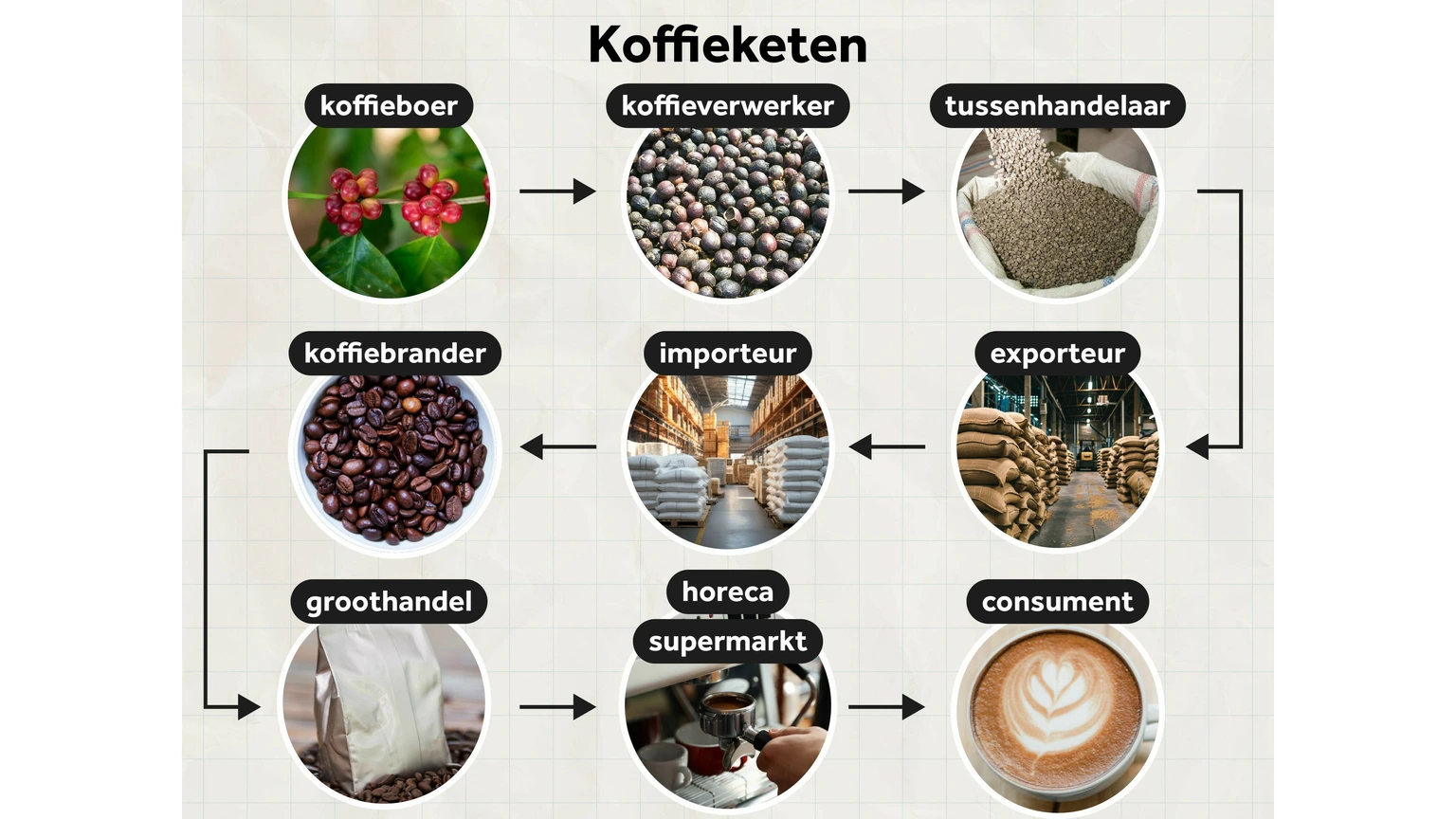
Supermarkets and coffee brands are not the only players in the supply chain. There are also farmers, processors, and various intermediaries. The question, then, is where the extra euros spent on a pack of coffee actually end up.
Buying Directly from Farmers
Coffee farmers are certainly not benefiting from the price increases, says coffee expert Bregje Deben of the Koffieschool. A coffee farmer might receive slightly more for their coffee, but most of the money still ends up with the major coffee companies. "Of the price we pay for coffee, around 20 percent goes to producing countries, while 80 percent of the money remains with companies in consuming countries."
To distribute this more fairly, some specialty coffee shops buy their coffee directly from farmers. And larger companies could do the same, says Guido van Staveren, founder of Moyee Coffee.
"We know every individual farmer, and each one is fully digitised. We buy coffee directly from them. We roast the coffee in the country of origin and sell it to consumers here. This way, we work with 12,000 farmers."
It is difficult to predict how coffee prices will develop in the coming months. Much will depend on the next harvest in Brazil, which begins around May. Experts expect coffee prices to continue fluctuating significantly until then. One thing seems certain: coffee will become more expensive for consumers. How much more expensive will depend on supermarkets and coffee brands.
Nieuwsuur also investigated the coffee shortage. Watch the video to discover the various factors contributing to it: