WELCOME TO THE WATERTOWER OF AFRICA
AND YOU CAN OWN/PROTECT IT.
INVEST IN THE FUTURE OF COFFEE.
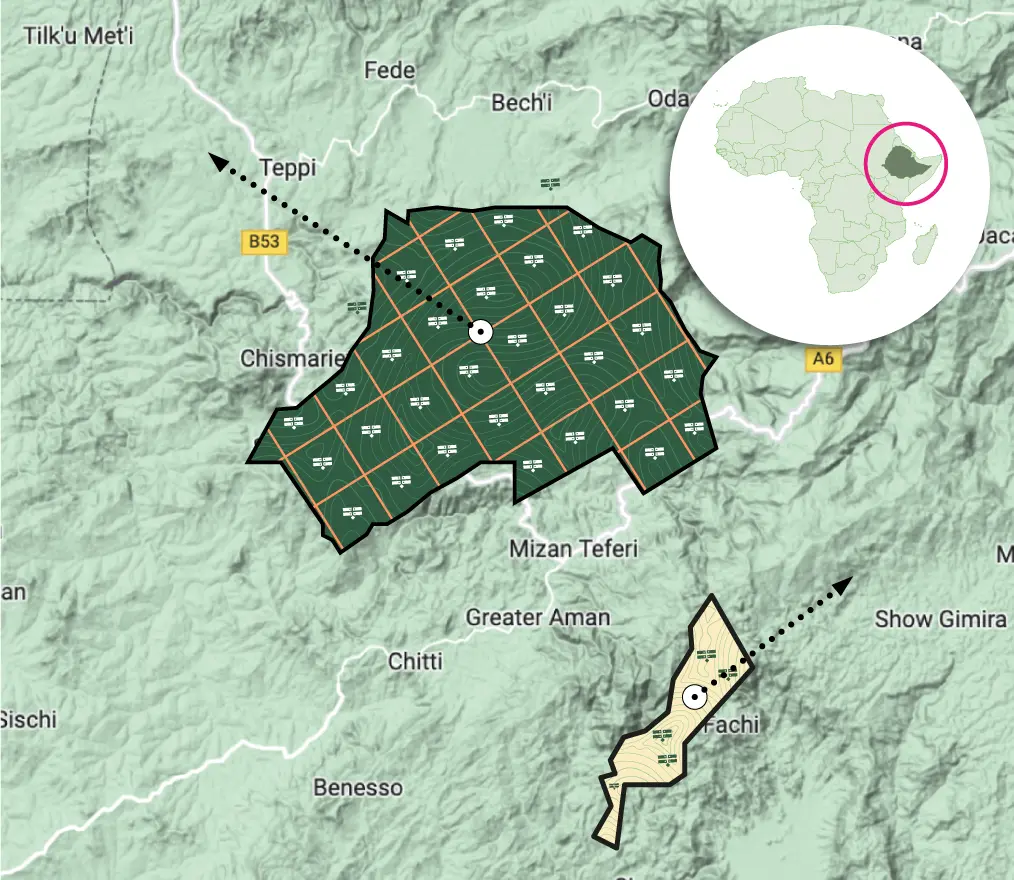
INVEST IN TWO OF THE LAST AFROMONTANE RAINFORESTS
TWO UNIQUE FOREST SHIELDED COFFEE FARMS IN SOUTHERN ETHIOPIA.
When Kjell stepped in as an impact investor a few years ago, he had one dream: to create the first living-wage, forest-protecting coffee farm in Ethiopia. His health prevented him from fully realising that ambition. When he saw what the FairChain approach had done for the neighbouring farm in Mizan, he reached out. He wanted to work together.
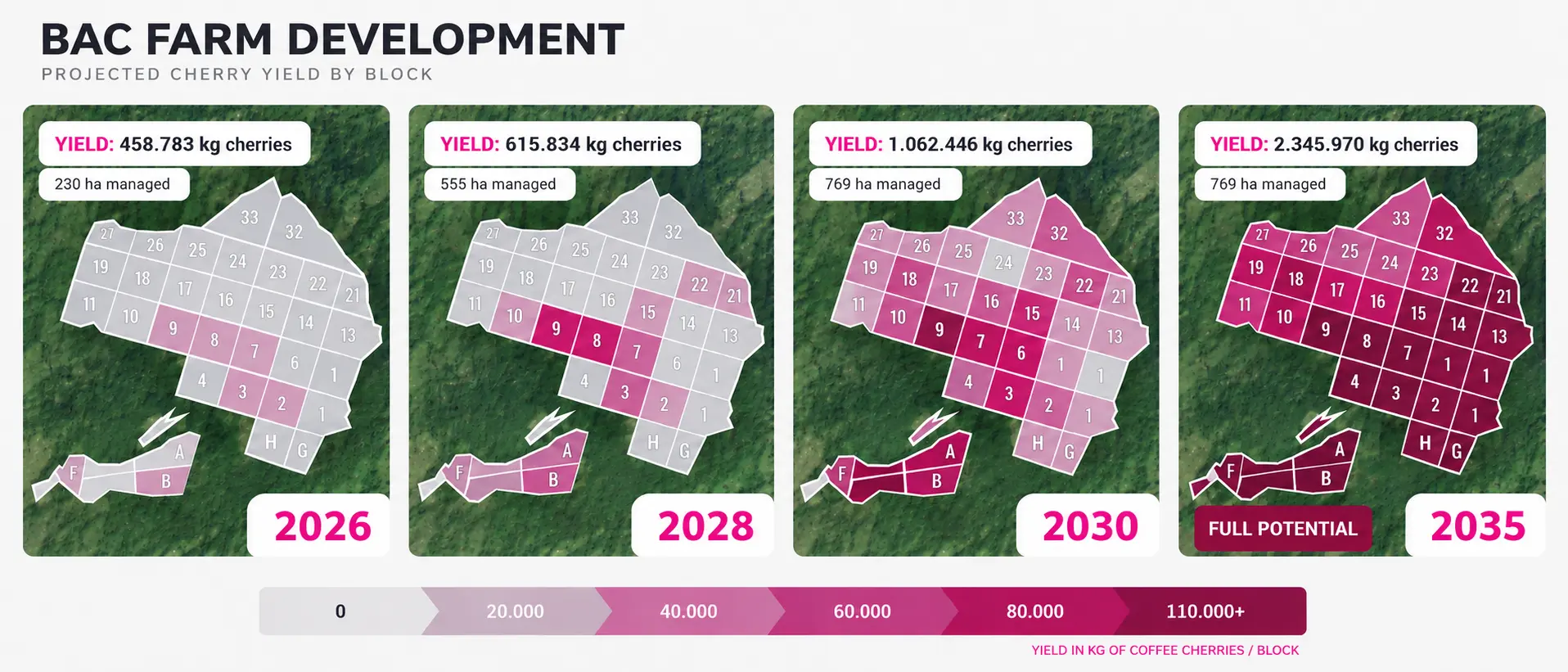
In twelve months, the Mizan team has helped map every block on this estate, digitize what used to live only in someone's memory, and earn Rainforest Alliance certification. A detailed plan was made to develop the farm to its full potential, a blueprint that could lead to massive reforestation.
Sadly, Kjell didn't get to see it finished. He passed away before this chapter was done, and for a while, none of us knew what came next.
But a dream this specific doesn't end with one person. It needs a new set of hands. So we're opening this up not to just any investor, but to people who see what Kjell saw.
This isn't a fund looking for a story. It's Kjell's story, looking for the people to finish it. Under the motto "Earning a profit while saving the planet," we invite you to invest in the Future of Coffee and become one of Kjell’s new visionaries.
POVERTY CAUSES DEFORESTATION
CAUSES CLIMATE CHANGE
The land around Kjell's dream is losing forest fast enough. A forest bigger in size than Amsterdam has been lost over the last decades. Totally Ethiopia lost 235 x the country of Lichtenstein. Better this capital of bankers and trust funds had invested in farms like this.
BIRHAN FARM - Light" (ብርሃን)
the mother farm BAC (Birhan Agricultural and Commercial PLC) is named after. It's the smaller, established core: about 130 hectares across 7 blocks (A, B, C, D, E, G, H), roughly 163,000 trees today growing toward a 287,000-tree target.
FILWOHA FOREST - Hot spring" (ፍልውሃ)
named for a hot spring rising among its trees. It's the much larger plot: about 638 hectares across 26 numbered blocks, roughly 467,600 trees today toward a 1.28 million target
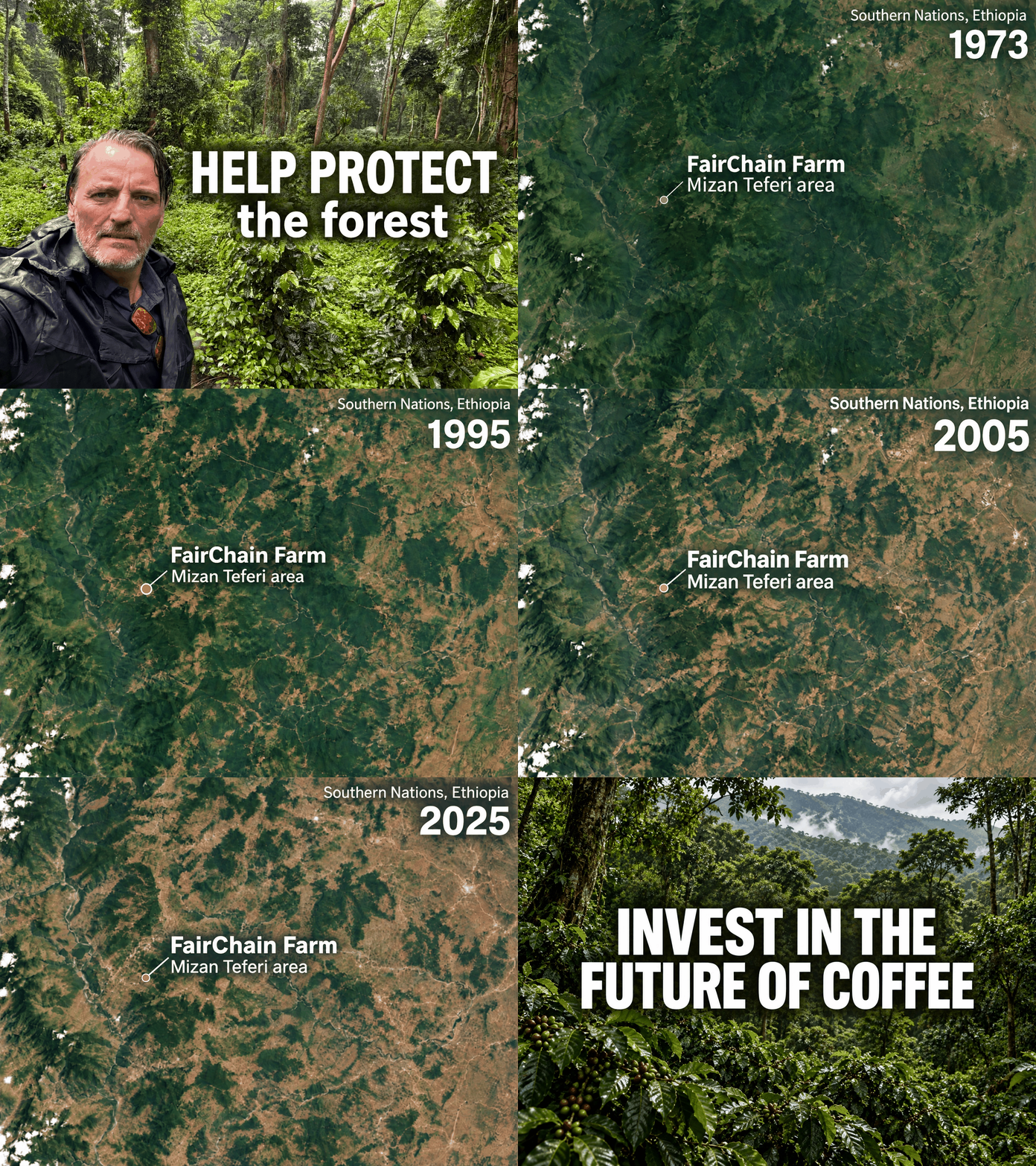
INVEST THE FUTURE OF COFFEE
his forest doesn't just hold carbon. It holds water for much of Africa. The rain here feeds rivers reaching 200 million people on their way to the Nile. Right now, it's being cut down, plot by plot.
Here's the cause. A few coffee multinationals dominate the trade, paying farmers minimal amounts driving them to deforest and plant monocrops that exhaust the land. This while the best coffee naturally flourishes under biodiverse forest canopy.
We're building the alternative: a farm where living wages, zero child labor, and regenerative farming aren't marketing claims, they're the business model.
And all this without compromising profitability. Our friends and neighbours at Mizan Farm have proven it. Now we're scaling their 250 hectares into our 800, to show the world what coffee's future looks like. We're creating a world where everybody wins.
THE OPPORTUNITY
Write one or two paragraphs describing your product or services. To be successful your content needs to be useful to your readers.
Start with the customer – find out what they want and give it to them.
Deep in the Southwest Highlands of Ethiopia, where the clouds snag on the canopy and the rain never really stops, lies a forest that matters far beyond its own borders. This is where Coffea arabica was born — every espresso on Earth traces its bloodline back to these hills. And this is a water tower: the rain that falls on these trees feeds rivers that flow toward the Nile, on their way to 200 million people downstream. The forest
doesn't just grow coffee. It makes rain. It fills rivers. It holds a continent's water in its roots.
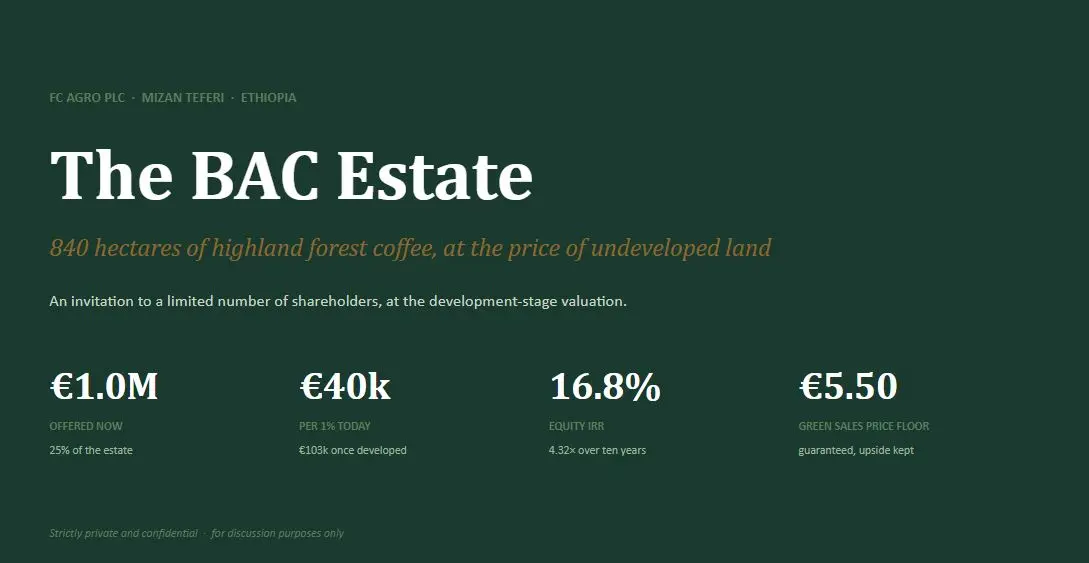
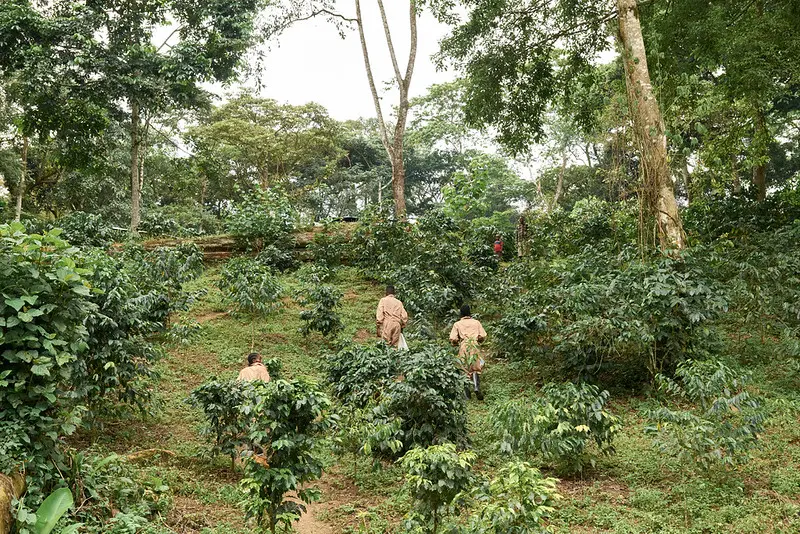
Our 840 hectares sit in the middle of it — in Mizan Teferi, Bench Sheko Zone, on the frontier between two UNESCO biosphere reserves. Hot springs rise among our trees. Colobus monkeys cross our blocks. Wild coffee still grows in the understory, the way it has for thousands of years.
And it is under threat. Bench Sheko is losing its forest faster than almost anywhere in Ethiopia — poverty drives deforestation drives climate change. But here's the thing about that cycle: it can be run in reverse. Pay people a living wage, make the forest worth more standing than cleared, and coffee becomes a reason to plant trees instead of cutting them.
That's what we're doing. And you can help save it — with what you buy, what you invest, or simply by coming to see it.
WHAT IS FAIRCHAIN?
FairChain isn't another sustainability standard to window-dress a supply chain or manufacture false consumer confidence it's a framework built on radical transparency and quantifiable, verifiable proof of impact, grounded in a real theory of change. It's an economic model for rebuilding trade so the value a product creates is shared fairly across the whole chain — producers, workers, consumers — instead of concentrating at the top, replacing the old aid model with businesses held accountable by technology anyone can check. Coffee proved it first; the ambition was always any commodity.
READY TO JOIN THE FUTURE
DOUBLE DIGIT RETURNS FOR YOU, LIVING WAGES FOR ALL INVOLVED
AND MASSIVE CARBON REMOVAL
FOREST SHIELDED SPECIALTY COFFEE
WITH
01
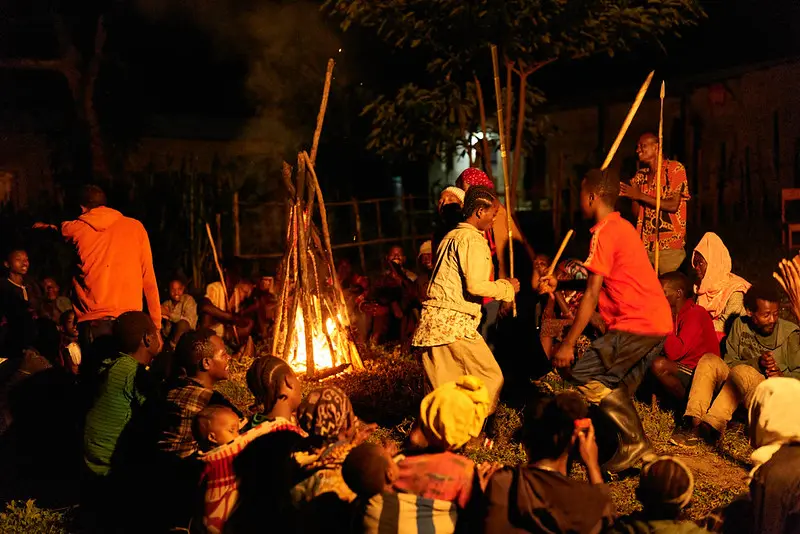
An age-old ritual: coffee roasted over open flame
02
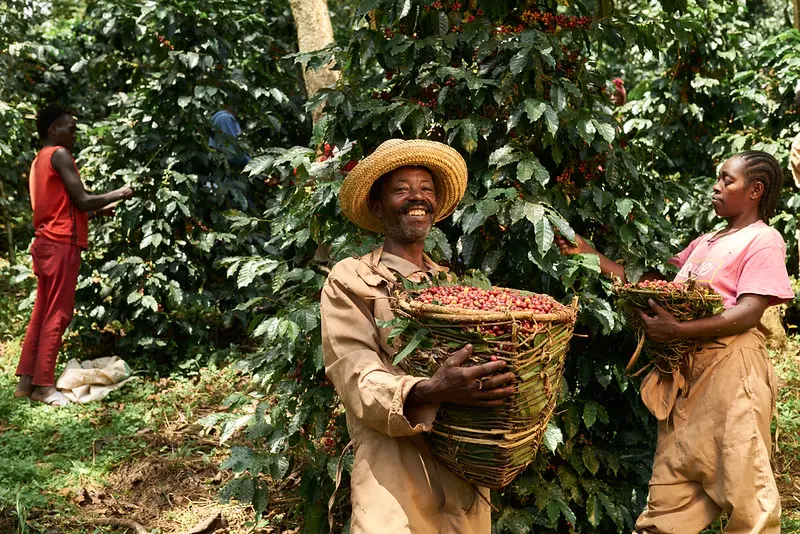
Every cherry, picked by hand
03
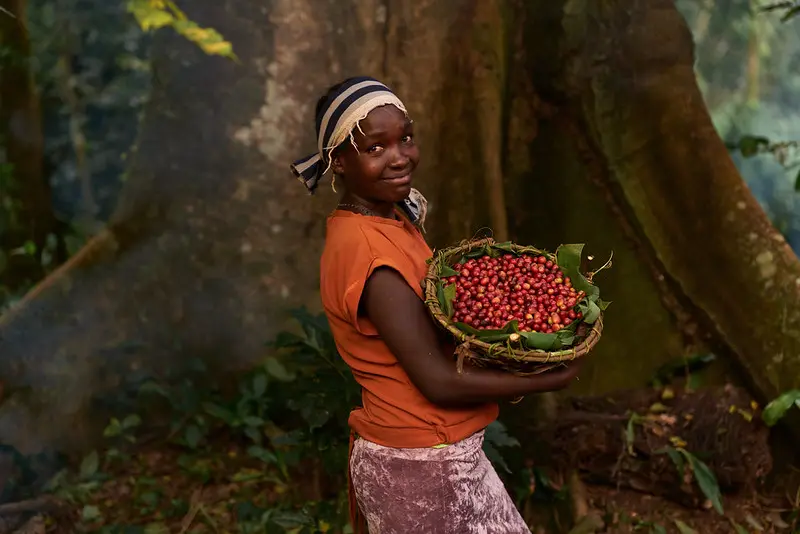
Grown in the shade of forest giants
04
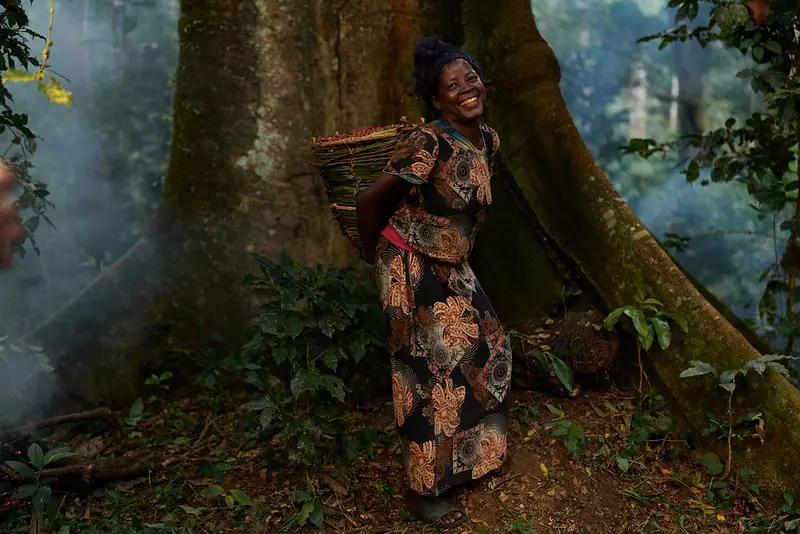
Wild coffee from Ethiopia's highland forests
NO CHARITY. NO GREENWASHING
JUST A BETTER BUSSINESS MODEL!
PEOPLE
-
Living wages & incomes
We pay by the Living Income Reference Price (LIRP) — the price that lets a family afford food, housing, healthcare, education and a little extra. Seasonal workers get real contracts, safe conditions, housing and healthcare. More pay, more productivity. Basic logic.
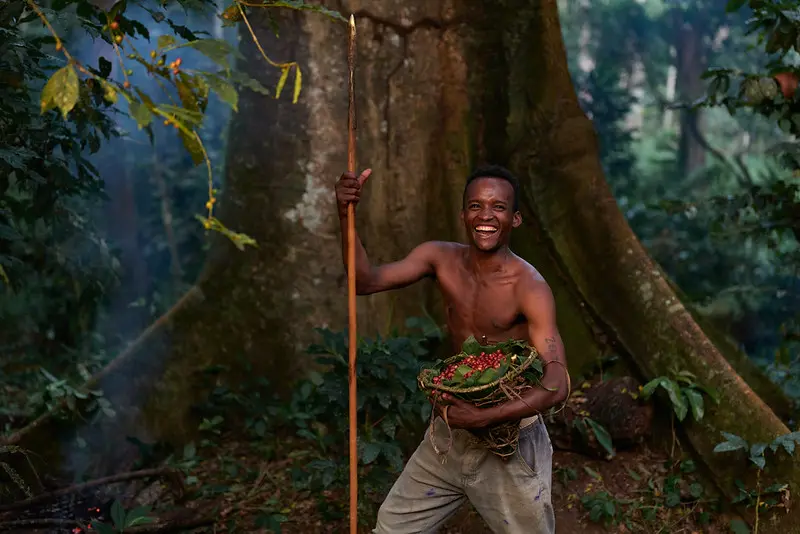
47% of school-aged children in our region work during harvest months. On our farm: none. Community-run monitoring committees, Rainforest Alliance's assess-and-address framework, and — most importantly — parents who earn enough that their kids can stay in school.
PLANET
-
Regenerative agroforestry
Shade trees, intercropping (vanilla, mango, avocado), soil restoration and climate-resilient varieties. It cuts input costs, builds resilience against a changing climate, and keeps the forest standing. The farm targets a surplus of 3,360 Mt in carbon credits. -
Radical transparency
FairChain technology tracks value distribution, labor conditions and environmental impact in real time. From storytelling to storyproving. If we claim it, you can check it. . -
Join us — or watch Big Coffee keep winning. We're proving that ethical and profitable aren't opposites. The farm development plan takes us from 630,000 to over 1.5 million trees and triples productivity per hectare and per worker..

For roasters & buyers: single-farm, traceable Ethiopian coffee with proof of impact, not promises. Samples on request.

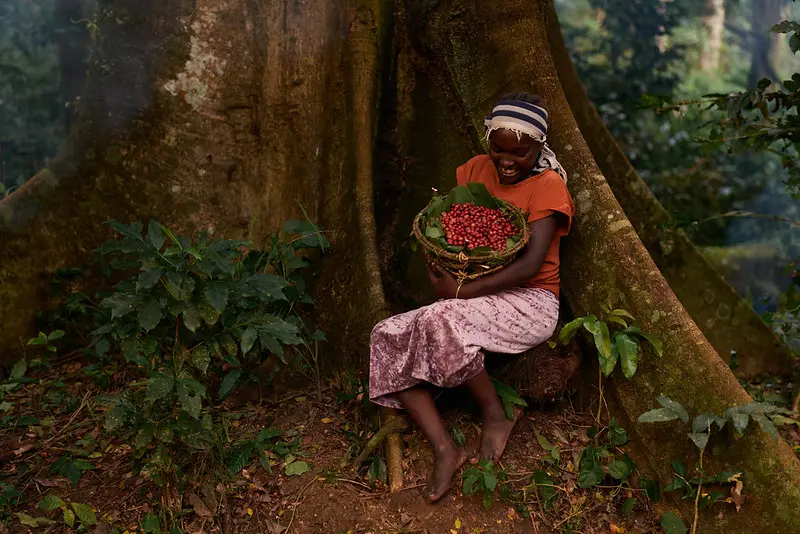
See the Forest Behind the Cup
Our 840 hectares in Ethiopia's Southwest Highlands sit between two UNESCO biosphere reserves — wild coffee, colobus monkeys and hot springs included.
Forest standing. Farmers paid. Coffee that proves it.